
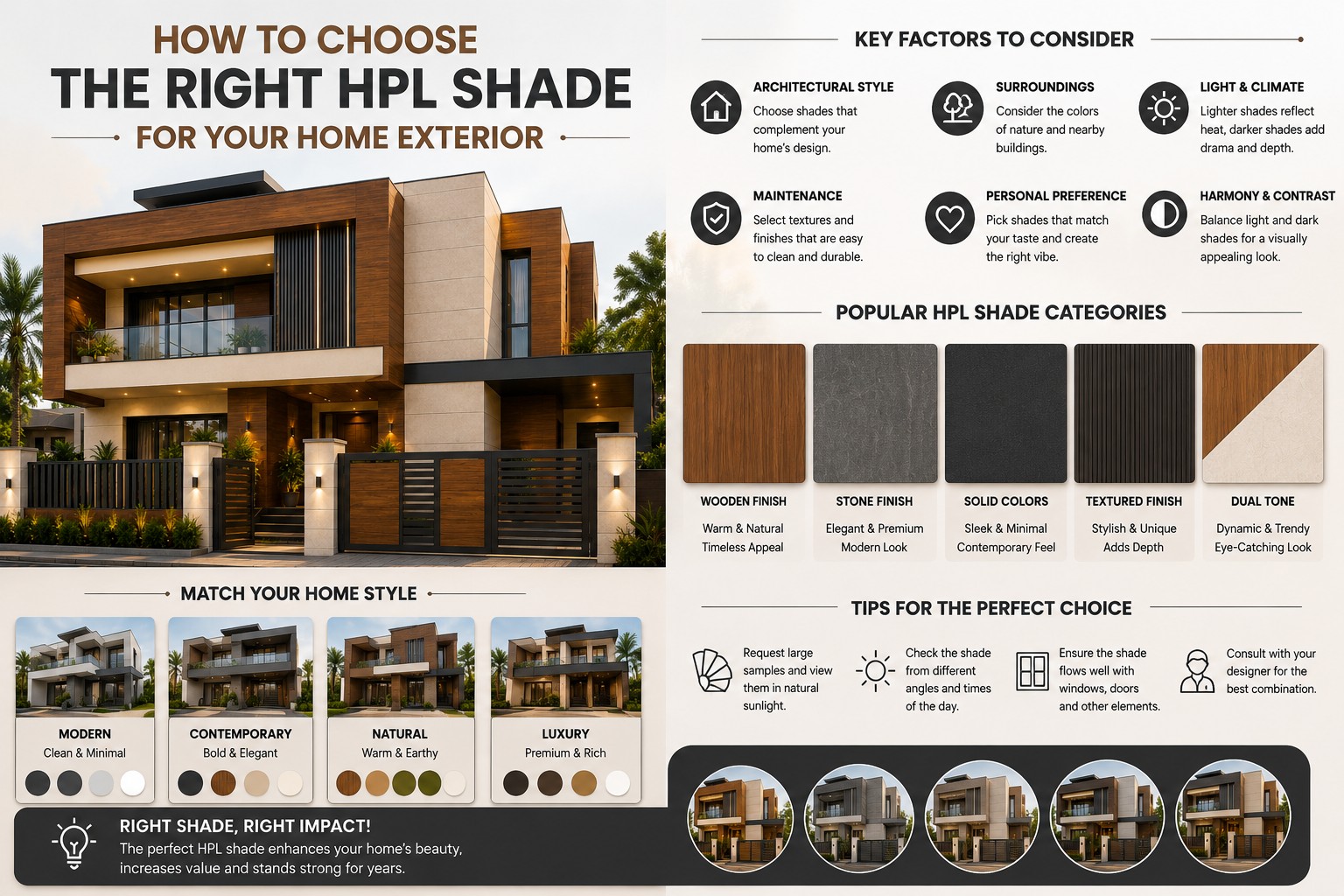
The right HPL shade depends on four things: which direction the wall faces, how dusty your area is, what colour your window frames already are, and how long you want the look to stay current. Aesthetics matter, but these practical factors are what determine whether you still like the facade in year five.
Start With Orientation
South and west-facing walls take the most direct sun and heat in most of India. Dark shades on these faces absorb significantly more heat, which can raise the temperature behind the cladding. If you want a dark facade, place it on north and east elevations, or use it as accent panels rather than the dominant surface.
North-facing walls get the least direct sun and can carry darker, richer tones without the same heat penalty.
Factor In Local Dust
This is the most underrated consideration. In dusty cities and near unpaved roads or ongoing construction, very light shades such as off-white, cream and pale grey show settled dust and rain-streaking within weeks. Mid-tone woods, warm greys and stone finishes hide it far better between cleanings.
If you are in a coastal or high-rainfall area, watch for vertical streaking below window sills and ledges. Mid-tones disguise this; very light and very dark shades both highlight it.
Work Around What You Already Have
Your cladding will sit next to window frames, railings, roof edges and the main gate. These are usually already fixed. Decide deliberately whether you are matching them or contrasting with them.
- Black or dark grey frames: pair well with mid-tone woods and light greys
- Wooden or brown frames: avoid a clashing second wood tone; go to stone or solid neutrals
- White frames: flexible, works with almost anything
Match the Shade to the Architecture
- Contemporary flat-roof homes: greys, charcoals, stone finishes, clean solid colours
- Traditional or semi-traditional: warm wood grains, teak and walnut tones
- Villa and resort style: mixed wood and stone blocking
- Commercial and showroom: solid colours in brand tones, or neutral greys as a backdrop for signage
How Many Shades Should You Use?
Two is the practical maximum for most facades. One dominant shade covering the bulk of the elevation, and one accent for feature volumes such as the entrance or balcony. Three or more usually reads as busy rather than designed, and it complicates ordering and installation.
Always See a Physical Sample
Screen colours are unreliable. Phone displays, monitor calibration and photo lighting all shift how a shade appears. Get a physical sample, hold it against your actual wall, and look at it at three different times of day. A wood tone that looks warm in morning light can read orange at midday.
Shades That Age Well
If you want the facade to still look current in ten years, mid-tone woods, warm greys and stone finishes are the safest bets. Highly saturated trend colours and very high-gloss finishes date faster. Cladding is a long-term decision; treat it more like flooring than like a paint colour you can change cheaply.
Frequently Asked Questions
Which HPL colour is best for a house exterior?
Mid-tone wood grains and warm greys are the most versatile. They suit most architecture, hide dust well and stay visually current.
Do dark HPL shades make the house hotter?
Dark surfaces absorb more heat. On south and west faces this is worth considering, though a ventilated cavity behind the cladding reduces the effect substantially.
Can I mix two different HPL shades?
Yes, and it usually looks better than a single flat shade. Keep it to two, with one clearly dominant.
Should I choose the shade from an online photo?
No. Always check a physical sample against your own wall in natural daylight before ordering.
Browse the UVCLAD Wooden, Stone, Marble and Solid Colour series, or request a physical sample before you decide.