
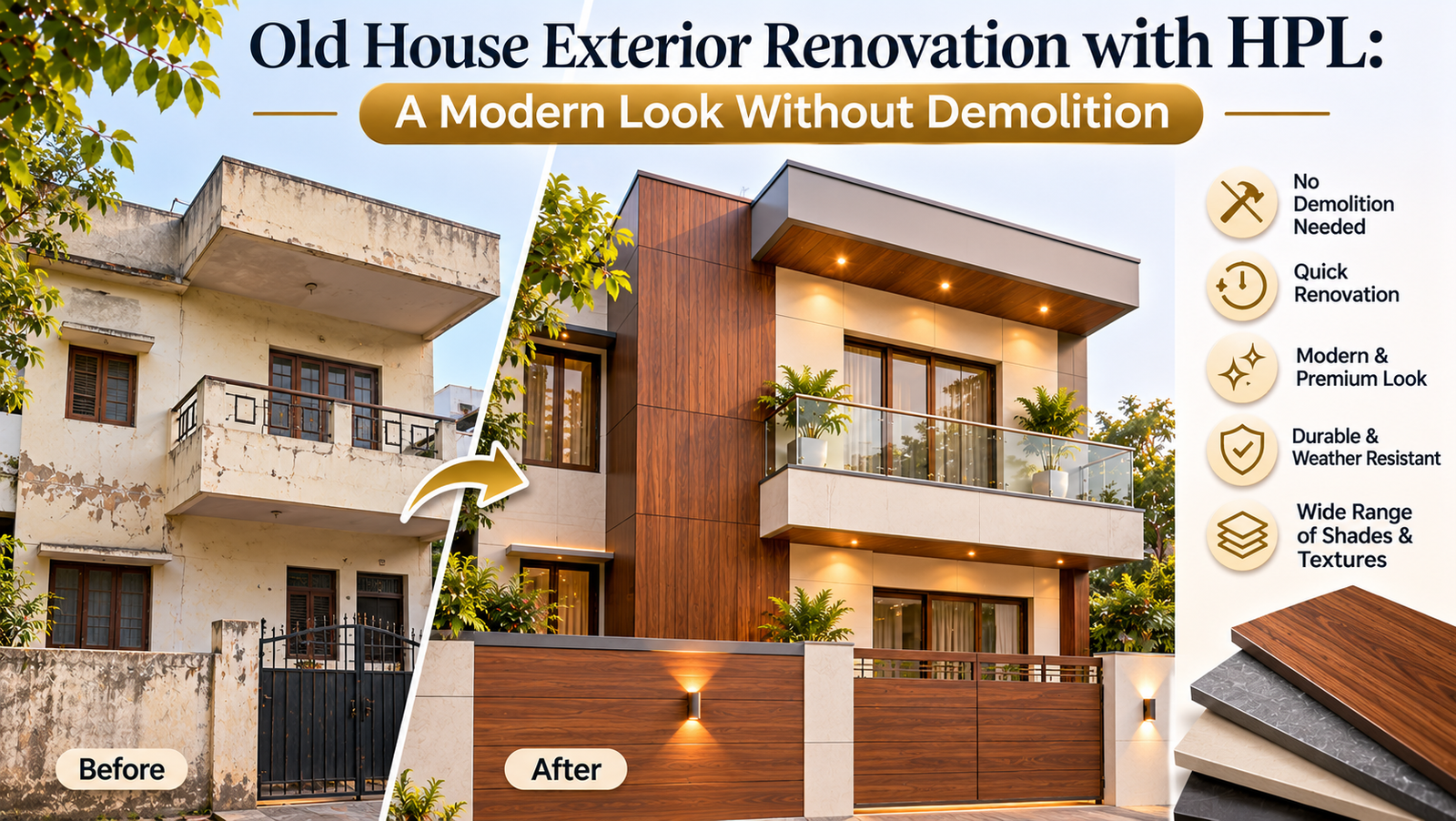
Your house is structurally sound, but the front looks dated: faded paint, old tiles, stained parapets. You don't need to break anything to fix it. Exterior HPL lets you give an older home a completely new face, fixed right over the existing walls.
Many Indian families live in homes built 15, 20 or 30 years ago. The structure is strong, the rooms are familiar, but the front elevation shows its age: faded paint, mosaic or ceramic tiles that have gone out of style, damp patches on the parapet and a design that looks like every other house from that era.
Rebuilding the front is expensive and messy. Repainting only buys a couple of years. Exterior HPL offers a third way: a complete new face, fixed on a frame over the existing walls, with no demolition.
Exterior HPL lets you renovate an old house elevation without demolition. The panels are fixed on an aluminium frame anchored to the existing walls, so you can cover dated paint or tiles with modern wood, stone, marble or solid finishes. First repair cracks and leaks, then plan a simple design with one or two features. UVCLAD exterior HPL carries a 15-year warranty.
- No breaking: HPL is fixed on a frame over existing walls.
- Repair cracks and leaks first; cladding is a finish, not a structural fix.
- Focus on high-impact areas: entrance, balcony and one feature.
- Update windows, railings and the gate along with the cladding.
- Dry installation means less mess and faster completion.
Why HPL Suits Renovations
No demolition. Old tiles or paint can usually stay, as long as the wall is sound. The frame is anchored through to the structure, and panels sit in front.
Less mess. No chipping, no wet plaster, no weeks of curing. Families can usually stay at home during the work.
Light weight. HPL adds very little load to older walls compared with stone or new tiles.
Hides old problems. Uneven plaster, mismatched repairs and dated tiles disappear behind a clean, uniform finish.
Step-by-Step Renovation Plan
- Photograph the house from the street and note what you want to change.
- Get a structural check if you see major cracks or signs of movement.
- Repair and waterproof cracks, parapets and slab edges.
- Remove loose tiles or plaster that can’t support anchors.
- Choose a simple design with one or two strong features.
- Update fixtures: windows, railings, lights and the gate.
- Install the frame and HPL panels, then seal edges and copings.
Our installation guide explains the subframe and alignment.
6 Renovation Ideas That Transform Older Homes
1. Cover the dated tiles
Many 1990s and 2000s homes have mosaic or glossy tiles on the front. Cladding over them with a wooden or stone finish instantly modernises the house.
2. New wooden balcony
Clad the balcony parapet in a warm wood finish and replace old grills with glass or slim metal railings. See the Wooden series.
3. Stone-finish entrance
A stone-finish wall around the main door gives a solid, updated arrival. See the Stone series.
4. Box frames on old windows
Projecting HPL frames around existing windows add depth and hide old sill stains. See window surround design.
5. Finish the roofline
Clad the parapet and staircase headroom so the top of the house matches the new look. See parapet and headroom cladding.
6. Match the gate and boundary
An old gate can undo a new elevation. Update it in a matching finish. See HPL main gate design ideas.
Renovation Options Compared
| Option | Mess & time | Look | How long it lasts | Upkeep |
|---|---|---|---|---|
| Repaint | Low | Same design, fresh colour | A few seasons | Repeat painting |
| Rebuild the front | Very high | Fully new | Long | Depends on finish |
| New tiles over old | High | Updated | Medium | Grout cleaning |
| Exterior HPL | Low | Fully new look | Long, 15-year warranty | Occasional washing |
Budget tip: If you can’t do everything at once, start with the entrance and balcony. Because all UVCLAD finishes use the same fixing system, you can extend the design later without it looking patched.
What to Expect During the Work
Most renovations go in this order: repairs, frame fixing, panel installation, then trims and finishing. Because there’s no wet work, dust and mess are limited, and the house stays usable. Work on the street-facing side may need scaffolding for a short time. Discuss timelines with your installer, and plan around festivals or family events.
The Result
A renovated HPL elevation doesn’t just look new on the day it’s finished. It stays fresh because it doesn’t need repainting, resists water and holds its colour. For many families, it’s the most visible upgrade they can make to an older home. For design inspiration, see duplex front elevation ideas and how to choose exterior HPL colours.
Mistakes to Avoid
Cladding over active leaks. Water trapped behind the cladding will keep damaging the wall. Fix leaks first.
Keeping old fixtures. Rusty grills and old window frames undo a new facade. Budget for updating them.
Backed by a 15-year warranty. See exactly what UVCLAD covers on your exterior HPL.
Read Warranty GuideFrequently Asked Questions
Can HPL be installed on an old house without breaking walls?
Yes. HPL is fixed on a frame anchored to the existing walls, so you can usually clad over sound plaster or tiles without demolition.
Do I need to remove old tiles before cladding?
Only if they’re loose or the wall behind isn’t sound. Firm tiles can usually stay, with the frame anchored through to the structure.
Should I fix cracks before HPL cladding?
Yes. Repair cracks and leaks first. Cladding protects and finishes the wall but doesn’t fix structural or waterproofing problems.
Can I live in the house during the renovation?
Usually yes. HPL installation is dry and creates far less mess than tile or plaster work.
What warranty does UVCLAD HPL have?
UVCLAD exterior HPL comes with a 15-year warranty.
Ready to renovate your elevation?
Share photos of your house with the UVCLAD team for shade ideas and a quote.
WhatsApp UsExplore UVCLAD HPL