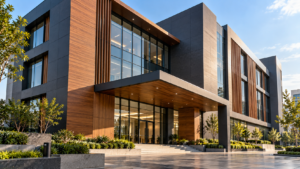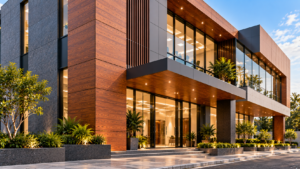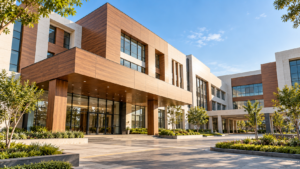
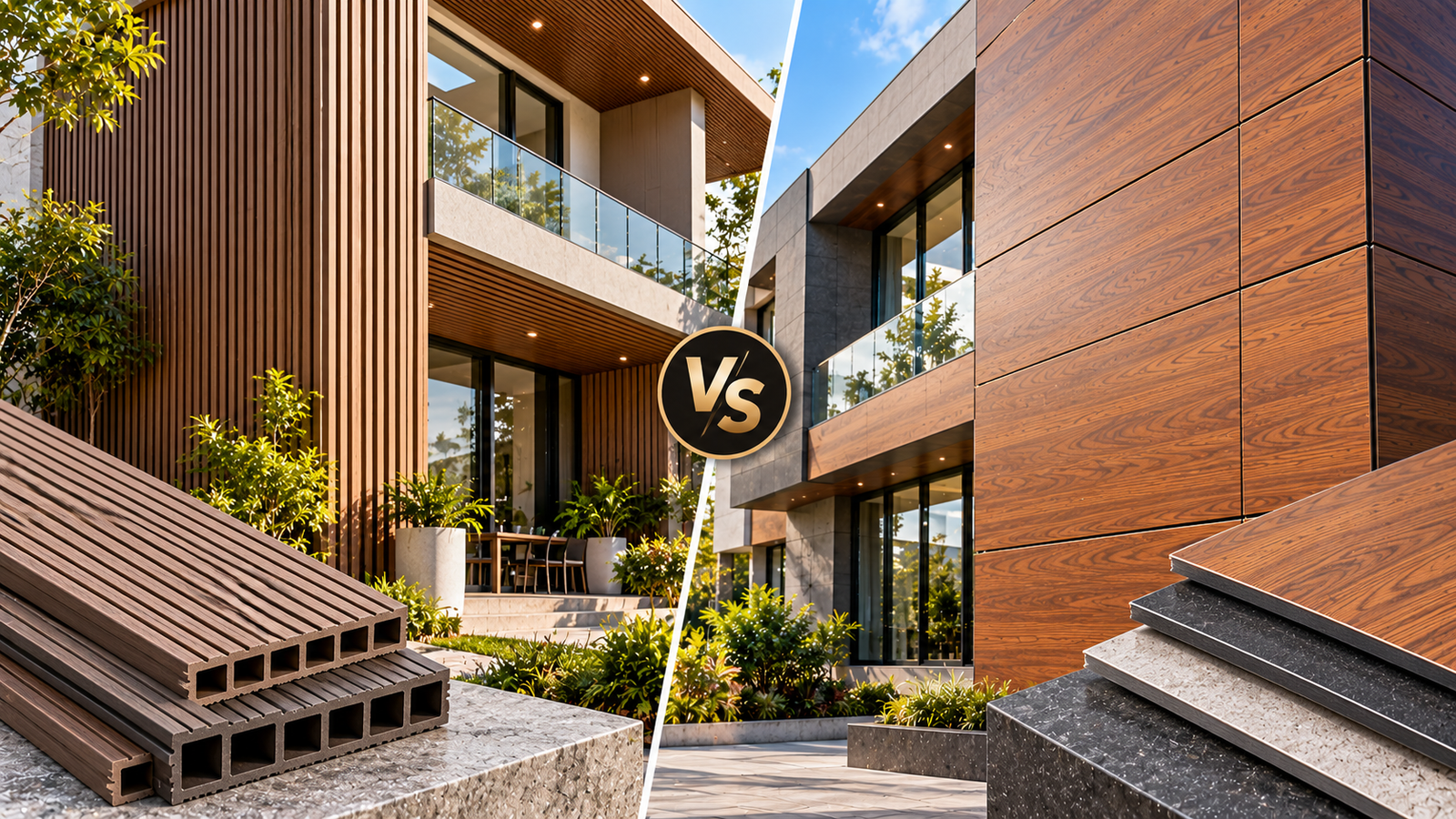
WPC vs Exterior HPL: Which Material Is Better for Long-Term Outdoor Design? is an important topic for architects, homeowners, builders and commercial developers who want an exterior that looks premium while remaining practical in everyday conditions. Exterior HPL works best when it is treated as part of a complete facade system rather than as a decorative sheet added at the end of construction. The final appearance depends on the finish, panel proportions, joints, subframe, surrounding materials, daylight and installation quality.
Why this topic matters in facade planning
A facade has to communicate the character of a building from a distance and still look convincing when viewed closely. Material selection therefore needs to consider both visual impact and practical execution. HPL can introduce wood, stone, marble or solid-colour character without requiring every wall to be covered. Selective use often creates a more sophisticated result than excessive cladding.
Where HPL can create the strongest visual impact
Entrance portals, balcony bands, feature volumes, soffits, gate faces and selected upper-storey planes are high-impact locations. These areas naturally attract attention and can connect separate architectural elements into one visual language. For larger buildings, a neutral primary field with HPL accents can provide depth without making the elevation visually heavy.
Plan the panel layout before fabrication
Panel layout should follow the architecture. Align important joints with window edges, doors, corners and structural lines wherever possible. Avoid tiny leftover pieces at the ends of a wall and maintain a consistent visual rhythm. A good elevation drawing should show panel direction, joint locations, corner conditions and transitions to other materials before fabrication starts.
Choose finishes for the building, not only the sample
A finish can look very different under direct sun, shade and evening lighting. Warm wood tones usually add residential warmth, stone textures create a grounded architectural expression, and dark solids can provide strong contrast. Physical samples should be viewed beside the actual window frames, paint and stone planned for the project.
Joints and edges make the difference
Premium facade work is immediately visible in the discipline of its joints. Uniform gaps, accurate corner returns and clean transitions make panels look engineered rather than simply attached to a wall. The panel should also read as a realistic thin architectural surface; overly bulky edges can make an otherwise good elevation look artificial.
Installation and subframe considerations
Exterior HPL is normally installed using a suitable supporting system with planned fixing points and joints. The subframe must be coordinated with the building structure, panel dimensions, wind conditions and the manufacturer's installation recommendations. Fabrication should protect the finished face and installation should avoid unnecessary damage to edges and surfaces.
Maintenance and long-term appearance
A well-designed facade should be easy to inspect and clean. Gentle cleaning with appropriate equipment is preferable to abrasive methods. Access should be considered around high elevations, recessed areas and soffits. The correct exterior-grade material should always be used; interior laminate should not be substituted simply because the finish looks similar.
Practical planning checklist
- Measure every facade plane and opening accurately.
- Divide the building into primary and accent zones.
- Select finishes using physical samples in daylight.
- Prepare a joint and panel layout before fabrication.
- Coordinate the aluminium/GI subframe and fixing method.
- Confirm corner, edge, soffit and window-return details.
- Protect panels during transport, storage and fabrication.
- Inspect alignment, joint consistency and surface condition before handover.
Exterior HPL design combinations
| Finish | Works well with | Design character |
|---|---|---|
| Warm wood-look | Ivory plaster, glass, stone | Warm and residential |
| Charcoal solid | Wood-look HPL, metal, glass | Bold and contemporary |
| Stone-look | Wood, concrete, black frames | Grounded and architectural |
| Marble-look | Warm neutrals, glass, metal | Premium and refined |
Common mistakes to avoid
- Choosing only from a digital image.
- Using too many patterns on one elevation.
- Ignoring joint alignment with windows and doors.
- Making panels appear unnecessarily thick or bulky.
- Leaving subframe and corner detailing until the end.
- Using interior-grade laminate outdoors.
Frequently Asked Questions
Is exterior HPL suitable for Indian buildings?
Exterior-grade HPL is designed for outdoor architectural use, subject to the correct product grade, fixing system and project-specific installation requirements.
Can HPL be combined with glass, stone and paint?
Yes. Combining HPL with glass, stone, metal and painted surfaces is a practical way to create depth and visual hierarchy.
Does HPL thickness matter?
Yes. Thickness affects stiffness and detailing. The suitable thickness depends on panel size, support spacing, wind conditions and manufacturer recommendations.
How should exterior HPL be cleaned?
Use water, a soft cloth or suitable soft cleaning equipment and manufacturer-approved mild cleaning methods. Avoid abrasive pads and aggressive chemicals.
Does the whole facade need HPL?
No. Selective use on entrances, balconies, feature walls, soffits and architectural volumes can create a stronger result than covering every surface.
Conclusion
The best HPL projects combine strong architecture with disciplined execution. When the material, colour, panel proportions, joints and supporting system are planned together, exterior HPL can create a facade that looks refined from the street and convincing up close. The final specification should always follow the project’s structural, climatic and installation requirements.