“Waterproof” gets used loosely in building material marketing, so it’s a fair question to ask directly: does an exterior HPL panel actually keep water out, or does it just look like it does until the first real monsoon?
What we tested
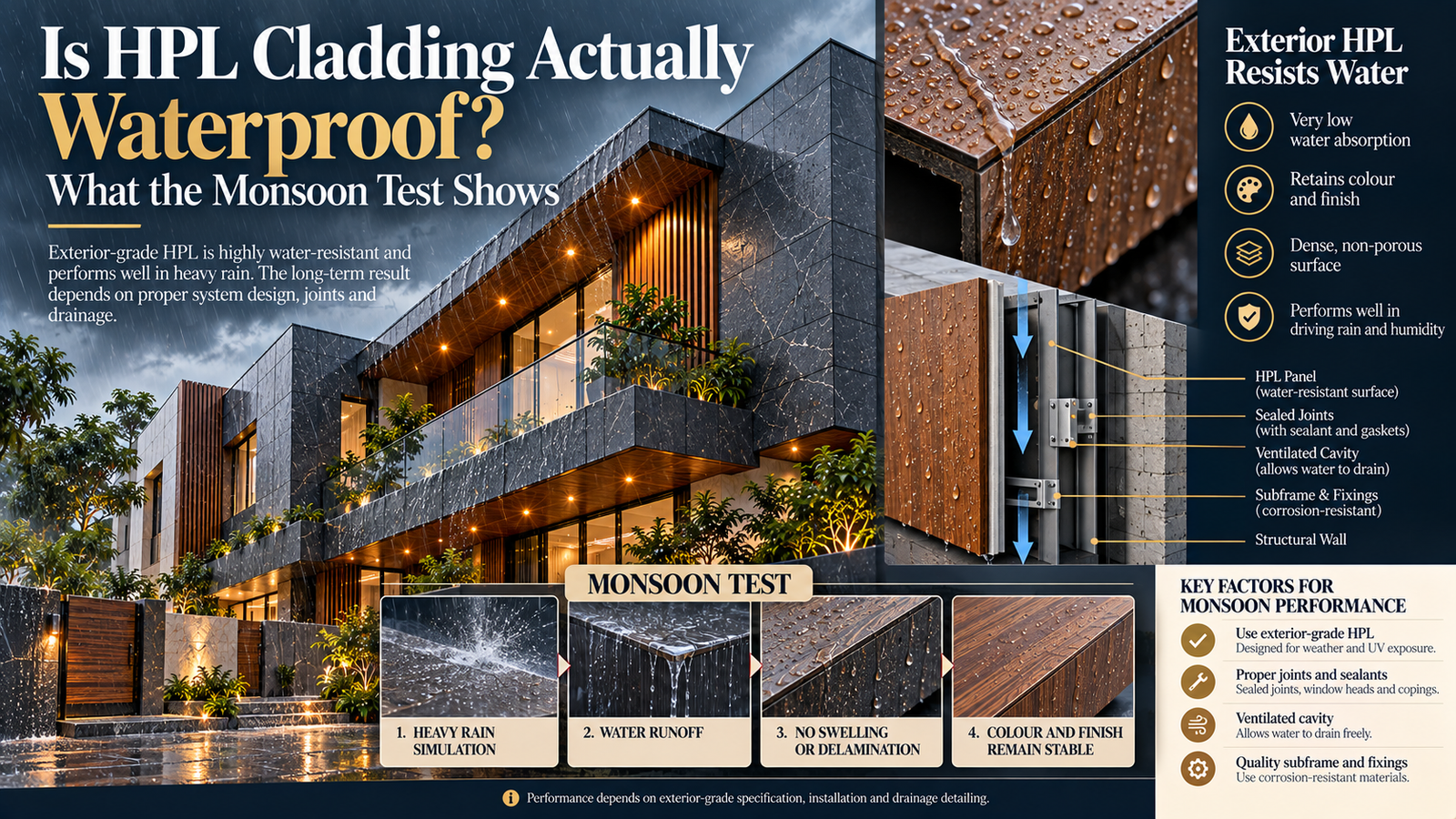
A cut section of exterior-grade HPL panel, submerged fully in a bucket of water for 24 hours, then pulled out and checked for swelling, warping, or any change in weight from water absorption. Separately, a fixed panel section on an exterior wall was left through a full monsoon season in Indore with no additional sealant beyond the standard fixing.
What happened to the submerged sample
No visible swelling. No warping. The panel came out the same dimensions it went in, because HPL’s compact core doesn’t absorb water the way porous materials like MDF or untreated plywood do — those materials swell and delaminate quickly if they take on moisture, which is exactly why they’re a poor choice for anything facing outdoor weather.
What happened on the actual wall
The panel showed no water ingress, no staining, and no algae growth at the panel surface itself after the monsoon. Where we did see minor staining was at one joint where the sealant application had a small gap — a workmanship issue, not a material one, and it’s exactly why installation quality matters as much as the panel spec.
Why the fixing system matters as much as the panel
A waterproof panel installed badly can still let water into a wall. HPL exterior installation typically uses a rain-screen approach — the panel sits with a small air gap behind it, on a frame, rather than being glued flush to the wall. That gap lets any moisture that does get past a joint drain and dry out, instead of sitting trapped against the wall the way it can behind a fully sealed system.
This is also why we don’t recommend DIY or unauthorised installation for warranty purposes (see the warranty post) — most water-related HPL failures trace back to fixing and jointing mistakes, not the panel material failing on its own.
Where water actually gets in, when it does
Almost always at joints, corners, and around openings like windows — the places where two panels meet or where the panel meets a different material. A correctly detailed installation seals and overlaps these points specifically. It’s worth asking your installer to walk you through exactly how corners and window returns are handled before work starts, not after.
FAQ
Can HPL panels be installed in coastal, high-salt-air areas?
Yes, exterior-grade HPL handles coastal exposure well since the panel itself doesn’t corrode the way metal cladding can. Fixing hardware should still be a corrosion-resistant grade in these locations.
Does standing water on a horizontal HPL surface, like a sill, cause damage over time?
The panel material itself won’t absorb or swell, but standing water anywhere long-term is worth avoiding through proper drainage detailing at design stage, regardless of material.
Do the joints need resealing every few years like a bathroom sealant would?
No, the sealants used in exterior HPL jointing are UV and weather-rated for the long term, not a bathroom-grade sealant that degrades quickly outdoors.
Watch the actual water test video on our Instagram if you want to see the submerged panel test rather than just read about it.