This is a short post, and that’s sort of the point. Compared to what an exterior paint job demands over the same period, HPL maintenance barely qualifies as a chore.
The actual maintenance routine
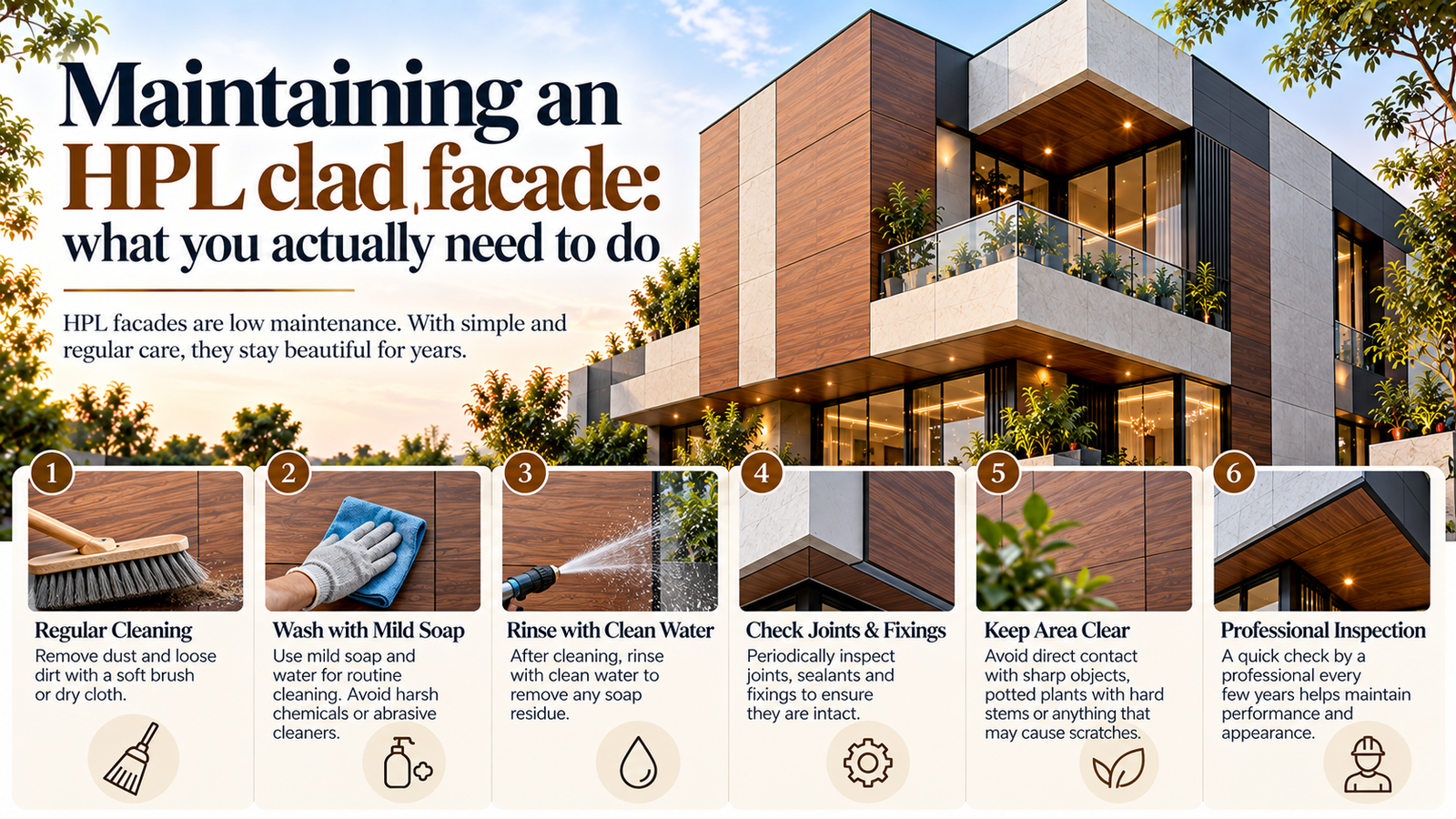
A wash, roughly twice a year, using water and a mild detergent, with a soft cloth or sponge — nothing abrasive, nothing that would scratch the surface finish. That’s genuinely most of it. No recoating, no resealing on a schedule, no periodic treatment the way timber or real stone cladding would need.
Why so little is needed
The panel’s protective top layer — often a nano-coated finish — is engineered specifically to resist dirt adhesion and UV degradation, which is a big part of why it doesn’t need the kind of periodic renewal a painted or oiled surface does. The material isn’t porous, so it doesn’t absorb grime the way plaster or untreated wood can, which means a simple wash actually lifts surface dirt rather than fighting something embedded in the material.
What to check for, even though issues are rare
Once or twice a year, alongside the wash, it’s worth a quick visual check of the joints and corners specifically — looking for any sealant that’s visibly cracked, gapped, or come loose, since joints are where the rare issue tends to show up first, not the flat panel surface itself. Catching a small joint issue early is a five-minute fix; left for years, it can let water in behind the panel.
What not to do
Avoid pressure washing directly at close range, which can force water into joints it wouldn’t otherwise reach. Avoid abrasive cleaners or scrubbing pads, which aren’t necessary and could dull the surface finish over time. And avoid ignoring a visibly damaged panel (from an impact, say) for years — it’s covered under warranty in most cases, and reporting it early keeps a small fix small.
Comparing this to a painted wall, honestly
A painted exterior needs the same kind of periodic wash HPL does, but on top of that, it’s also accumulating the slow degradation that eventually demands a full repaint — chalking, fading, occasional patch touch-ups in high-wear areas. HPL’s maintenance ceiling is basically the wash. There’s no equivalent “eventually you’ll need to redo the whole thing” step built in.
FAQ
Can I use a regular household glass or surface cleaner instead of plain water and mild detergent?
Plain water with a mild detergent is sufficient and safest — there’s no need for a specialised product, and strong chemical cleaners aren’t necessary and could affect the surface finish over time.
Does the maintenance routine change for homes in dustier or more polluted areas?
The wash frequency can reasonably increase to three or four times a year in heavier dust or pollution conditions, but the routine itself doesn’t change — it’s still just a wash.
What should I do if I notice a joint sealant issue?
Reach out and describe or photograph what you’re seeing — small joint issues are a quick fix and worth addressing early rather than waiting.
Download the maintenance checklist for a simple twice-yearly routine you can hand to whoever does your home upkeep.