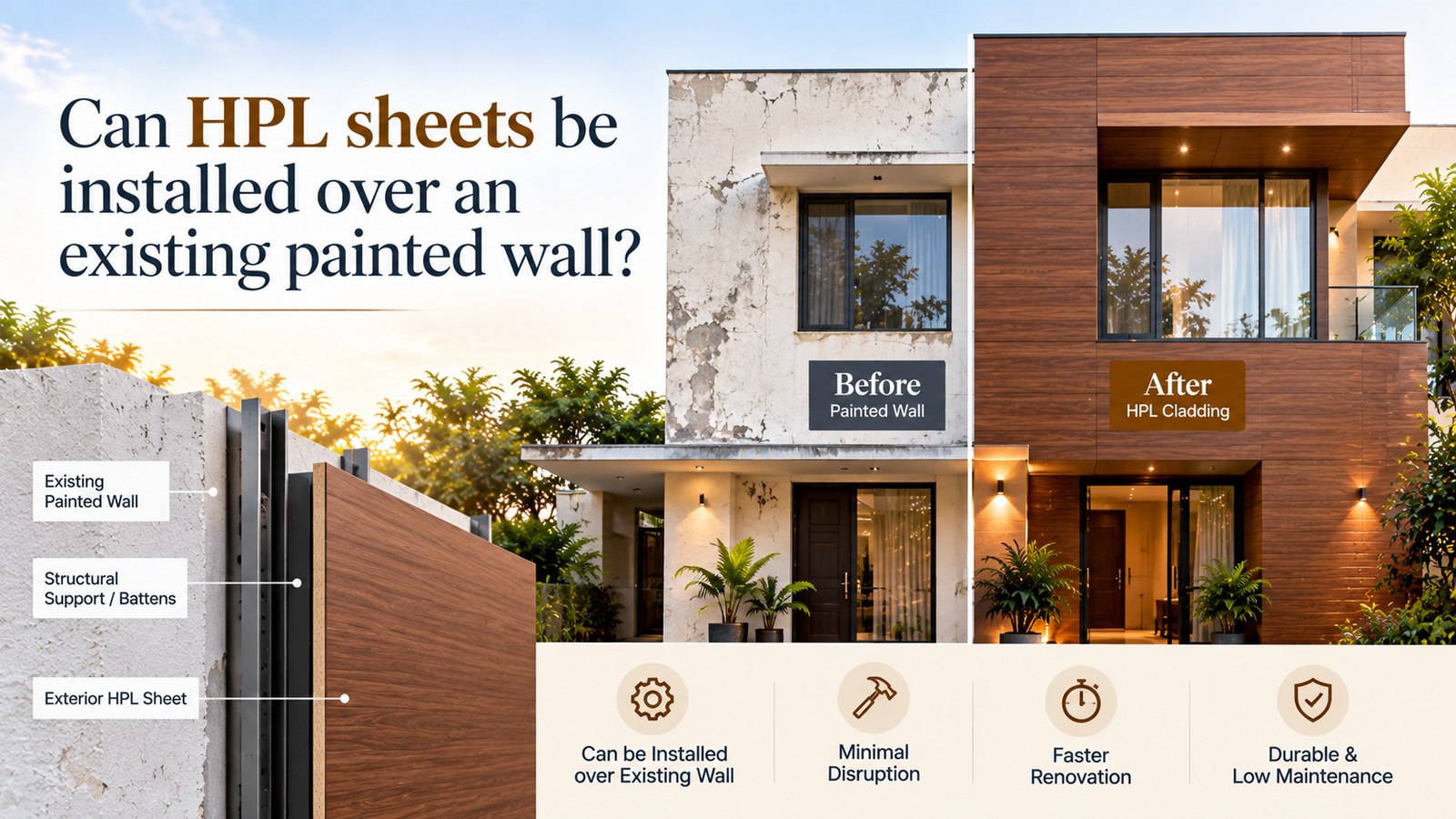
A common concern before renovation: does the existing exterior need to be stripped back to bare wall first, or can HPL cladding go over what’s already there? The short answer is that in most cases, yes, it can — and that’s actually one of the practical advantages of this kind of cladding over a full re-plastering job.
Why this is usually possible
HPL cladding isn’t bonded directly to the wall surface the way paint or plaster is. It’s fixed onto a substructure frame, with an air gap between the panel and the existing wall. Because the panel system doesn’t depend on adhering to the surface underneath, an existing coat of paint or a sound layer of plaster generally isn’t a problem — the frame is mechanically fixed into the wall structure itself, not glued to the surface finish.
When it’s not that simple
If the existing wall has active structural issues — significant cracking, visible dampness, or plaster that’s loose and flaking rather than just old — those problems need addressing before cladding goes up, not covered over. Cladding over a genuinely unsound wall doesn’t fix the underlying issue, and depending on severity, it can make the problem harder to detect and address later since it’s now hidden behind the panel.
This is exactly why a proper site assessment happens before any installation quote is finalised — it’s not just about measuring for panels, it’s about checking that what’s underneath is a reasonable surface to fix a frame into.
What a site check typically looks for
Visible cracking patterns that might indicate structural movement rather than surface-level aging, any active damp patches, and whether the existing plaster is well-adhered or starting to come away from the wall. Most homes, even older ones with a tired-looking painted exterior, pass this check without issue — a faded, chalky paint job is a cosmetic problem, not a structural one, and is exactly the kind of surface HPL cladding is well suited to go over.
The practical upside of this
It means a full HPL renovation doesn’t require the disruption, mess, and additional cost of stripping an exterior back to bare wall first. The existing painted surface essentially disappears behind the new facade, which is part of why the overall installation timeline (see our post on realistic timelines) is faster than a full re-plaster-and-repaint job would be.
FAQ
What if only part of my wall has a damp issue?
That section can typically be addressed and repaired locally before cladding, without needing to treat the entire wall — the site assessment would identify specifically which areas, if any, need attention first.
Does this apply to older homes with multiple layers of old paint?
Generally yes, as long as the paint layers are well-adhered and not flaking, multiple old coats aren’t usually a barrier on their own.
Will covering the old paint trap moisture behind the panel?
No — the ventilated air gap in the installation system is specifically designed to let any moisture drain and dry rather than get trapped, regardless of what’s on the wall surface underneath.
Send your wall photos for a check, and we’ll give you an honest read on whether your existing exterior is ready to clad over.