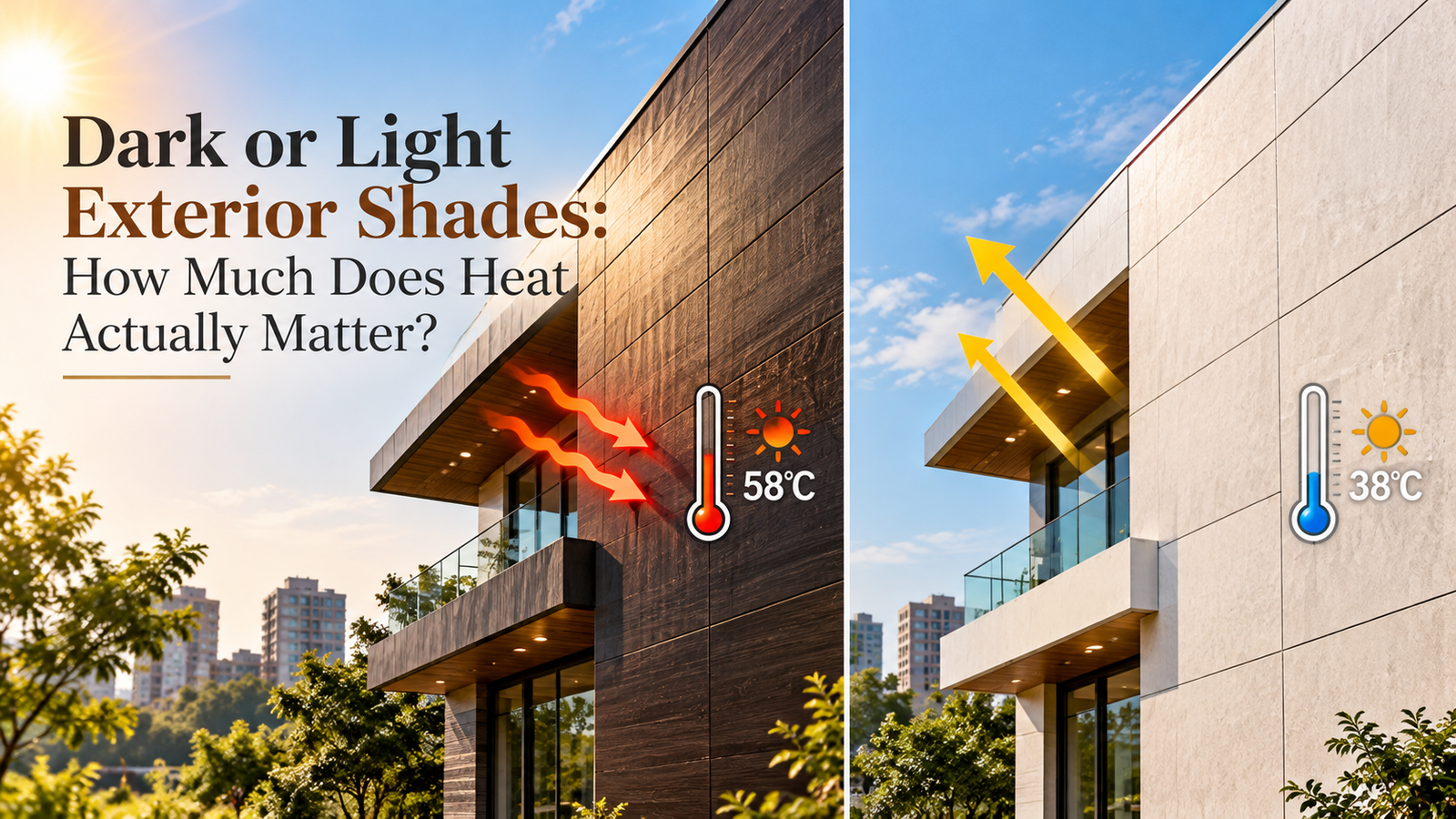
Yes, dark exterior surfaces absorb more heat than light ones. But whether that heat reaches the inside of your house depends far more on how the cladding is built than on what colour it is. This is the part that rarely comes up when people are choosing shades.
The Physics, Briefly
A dark surface absorbs more solar radiation and gets hotter. On a summer afternoon in most of India, a dark facade surface can run substantially hotter than a light one in the same position.
That is real. What matters is what happens to that heat next.
The Detail That Changes Everything
Cladding can be fixed two ways. Directly onto the wall, with the panel sitting flat against it. Or on a framework with an air gap behind, open at the bottom and top.
In the first case, heat absorbed by the panel conducts straight into the wall and eventually into your rooms.
In the second, the air in the gap heats up, rises, and escapes out of the top, pulling cooler air in at the bottom. Much of the absorbed heat leaves before it ever reaches the wall. This is a ventilated facade, and it is how exterior cladding is supposed to be built.
So the honest answer to “will a dark facade make my house hotter” is: on a direct-fixed installation, noticeably. On a properly built ventilated one, far less than you would expect.
What This Means Practically
If the cladding is going up on a framework with a gap
You have real freedom on shade. Dark finishes are viable, and the thermal penalty is much smaller than the colour difference suggests.
If it is being fixed flat to the wall
Avoid dark shades on south and west elevations. And more importantly, ask why it is being fixed flat, because the cavity does several other jobs besides this one — it drains water that gets past the joints and lets the wall dry out.
The Other Factors, Honestly Ranked
Facade colour is not the biggest driver of how hot your house gets. In rough order of impact:
- Roof. The roof takes direct overhead sun all day and is almost always the largest heat gain in an Indian home.
- Windows and glazing. Direct sunlight through glass heats a room far faster than conduction through a wall.
- Shading. Overhangs, balconies and trees that keep sun off walls and windows.
- Wall construction and insulation.
- Facade colour.
If cooling is genuinely a priority, the money goes further on roof treatment and window shading than on choosing a lighter wall colour.
The Practical Consideration Nobody Mentions
When homeowners ask us at UVCLAD which shade to pick, this is usually the factor that decides it rather than heat.
Dust matters more than heat for most homeowners, and it cuts the other way.
Very light shades show dust, rain streaking and splash marks within weeks in most Indian cities. Very dark shades show dust too, just differently — a film of pale dust on charcoal is quite visible.
Mid-tones hide both best. This is the practical reason mid-tone woods and greys dominate real Indian facades rather than the extremes, and it is worth weighing alongside the thermal question.
Frequently Asked Questions
Will a dark facade make my house hotter?
Direct-fixed to the wall, yes, noticeably. On a ventilated facade with an air gap behind the panels, much less than you would expect.
What is a ventilated facade?
Cladding fixed on a framework with an air gap behind it, open at bottom and top, so heated air escapes and water that gets past joints can drain and dry.
Which exterior colour is coolest?
Lighter shades absorb less heat, but roof treatment and window shading affect indoor temperature far more than wall colour does.
Which shade is most practical overall?
Mid-tones. They hide dust and streaking better than either very light or very dark shades, which is what most homeowners notice day to day.
Unsure about a shade for your orientation? Send us your house photo and which direction the main wall faces.