There’s a specific kind of disappointment that comes from picking a rich, deep exterior colour and watching it turn pale and chalky within two summers. It happens to paint constantly. It happens to some lower-grade cladding materials too. It’s worth understanding why, because the answer explains what to actually look for when choosing a facade material.
What UV does to colour, mechanically
Ultraviolet light breaks down the chemical bonds in pigments over time. This is true of almost any coloured material left outdoors — it’s why car paint fades, why plastic outdoor furniture yellows, why a painted wall’s colour looks different after a few years compared to the day it was applied. The rate at which this happens depends entirely on how the colour is applied and protected.
Paint’s pigment sits at the surface, in a relatively thin film, directly exposed. That’s part of why it fades faster than people expect.
How HPL protects its colour differently
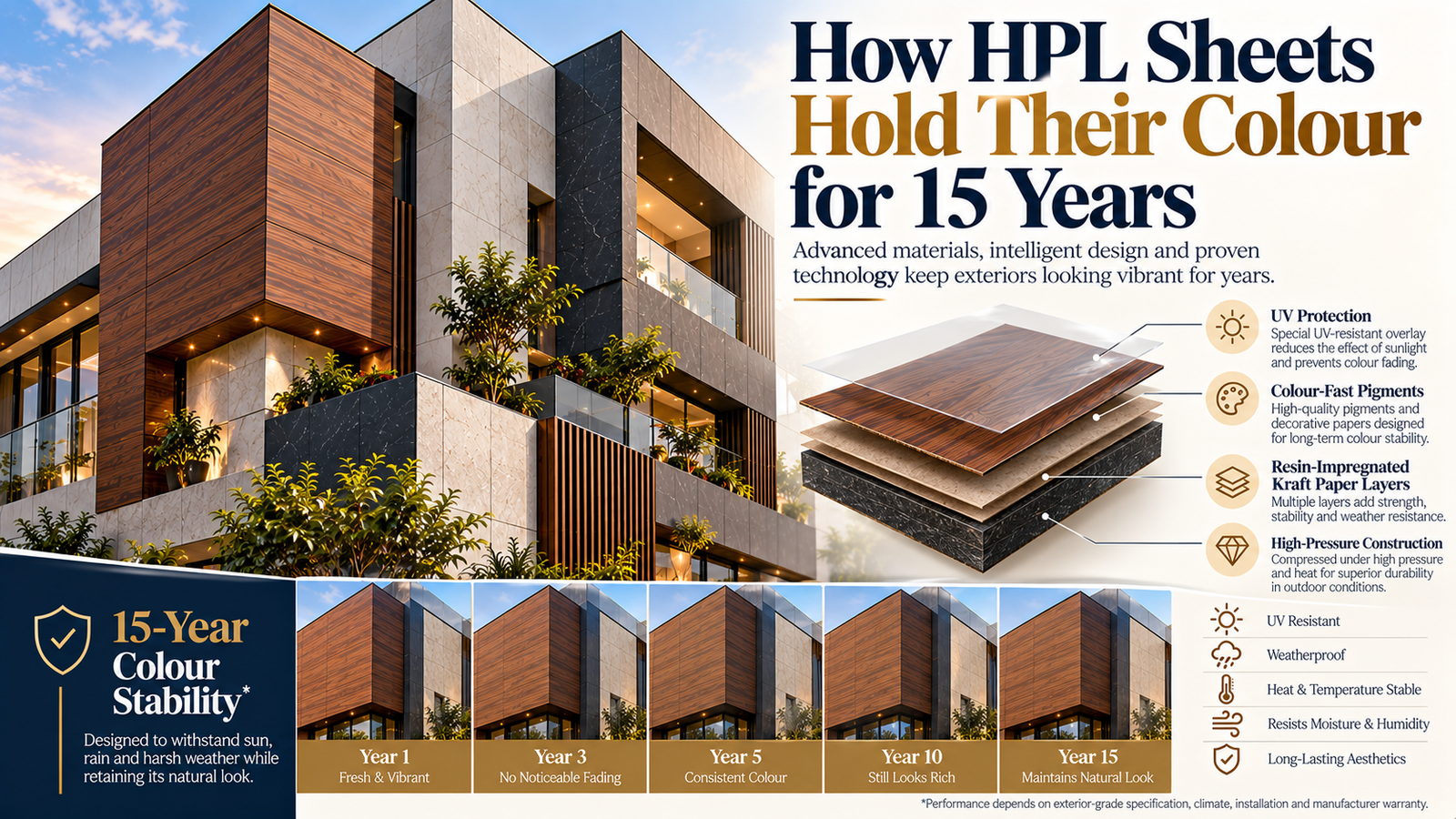
Exterior-grade HPL panels use a decorative layer that’s impregnated with the colour and resin through the material, then finished with a protective overlay — often a nano-coated top surface — specifically engineered to filter and resist UV degradation. The colour isn’t just sitting on top waiting to be broken down; it’s structurally part of a layer built to take the UV exposure.
This is tested over accelerated weathering cycles that simulate years of sun exposure in a shorter lab timeframe, which is how a 15-year colour-retention claim gets made with some actual basis rather than just being asserted.
Which colours fade fastest, regardless of material
Reds and dark blues are typically the most UV-sensitive pigments across almost any material — they show fade first and most visibly. Earthy tones, greys, and wood-finish browns tend to hold up better over time, which is part of why those finishes dominate exterior cladding catalogues generally, UVCLAD’s included. It’s not purely an aesthetic trend; it’s also a practical one.
What actual fade looks like on HPL versus paint
On a painted wall, fade shows up as visible chalking — a dusty, powdery residue you can wipe off with a finger, along with a general dulling of the colour. On HPL, the change over many years is a much more gradual, even shift in tone, without the chalking or surface breakdown. Side by side, a five-year-old HPL panel and a five-year-old paint job on the same elevation tell a very different story.
FAQ
Do darker HPL finishes need extra care compared to lighter ones?
Not extra maintenance, but it’s worth knowing darker tones will show any gradual fade slightly more visibly than lighter or wood-finish tones, simply because the contrast is bigger.
Can UV fade be reversed once it happens?
Not on paint — the only fix is repainting. This is part of the ongoing cost paint carries that a one-time HPL installation avoids.
Does orientation matter — does a south or west-facing wall fade faster?
Yes, on any material. Walls with the most direct sun exposure will show any fading soonest, which is exactly the elevation worth prioritising for UV-resistant cladding first if you’re doing the facade in stages.
See real colour-retention photos from installations that have now been up for several years, not just day-one renders.