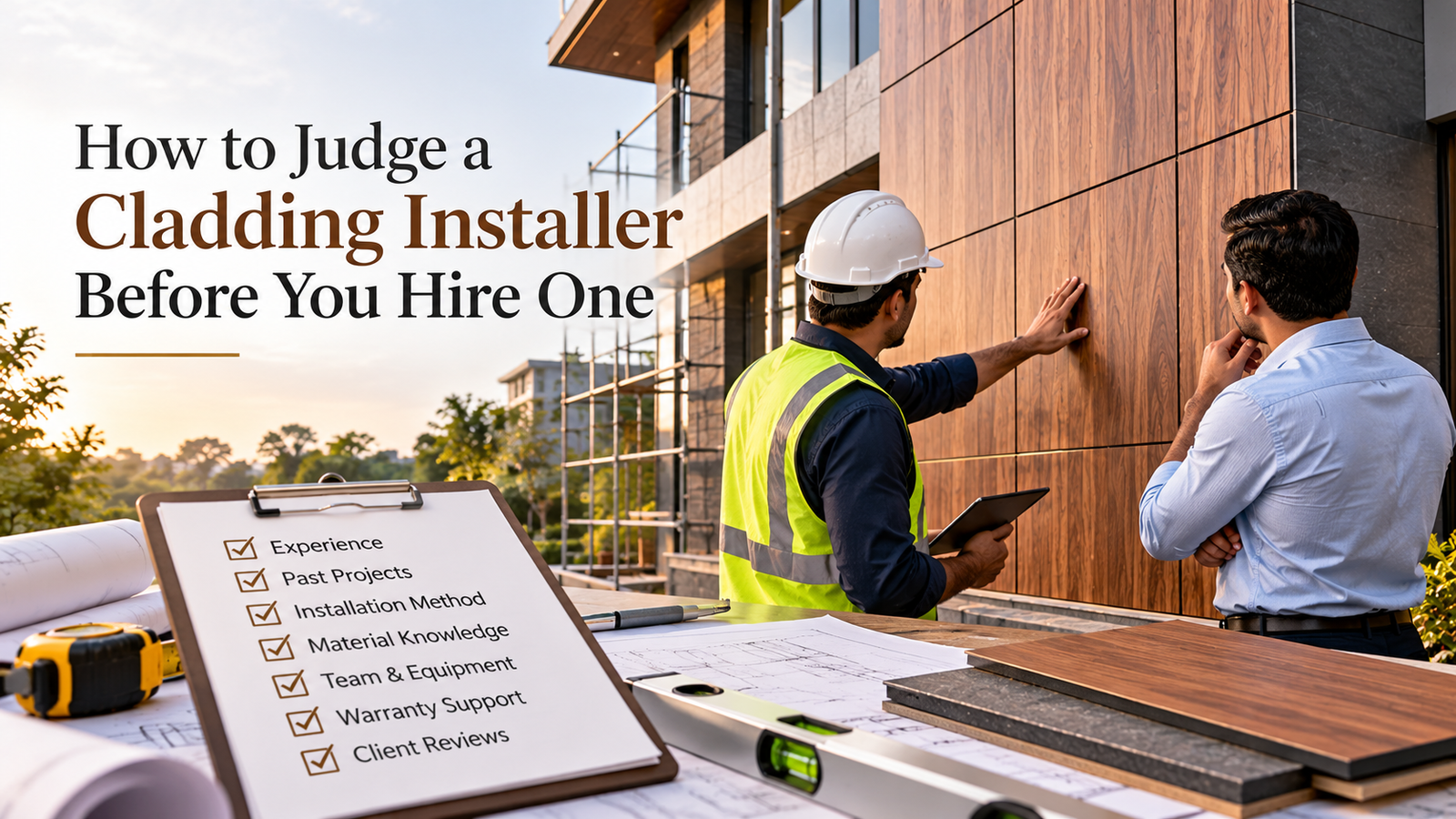
You can buy excellent panels and end up with a facade that fails in four years, because almost everything that goes wrong with cladding goes wrong during installation. Choosing the installer deserves more attention than choosing the brand, and most homeowners do it the other way round.
Eight Questions Worth Asking
1. What framework material will you use, and why?
You are listening for a specific answer — galvanised, aluminium, or mild steel with a stated coating system — and a reason connected to your location.
“MS angle, we’ll paint it” is the answer that precedes most facade failures in India. The frame sits inside a permanently damp cavity for twenty years and a coat of primer does not protect it.
2. What spacing will the framework be at?
They should relate it to the panel thickness and size, not quote a number from habit. Spacing that is too wide for the panel produces visible bowing in direct sun.
3. How much expansion gap will you leave at the panel edges?
A specific figure, and awareness of why it matters. Panels expand and contract significantly with temperature. An installer who wants joints as tight as possible for a neater look is telling you they will cause bowing.
4. Will the cavity be open at the bottom and top?
The air gap behind the panels drains water and lets the wall dry. Sealing it, or packing it with anything, turns a drainage system into a moisture trap.
5. How will you treat cut edges?
Every panel cut around a window or at a corner exposes the core. Horizontal bottom edges especially need sealing, because water sits there.
6. Can I see a facade you did three or more years ago?
Not a recent one. Anything looks good at handover. A three-year-old job shows whether the joints have stayed even, whether anything is bowing, and whether rust staining has started at fixing points.
An installer with nothing older than last season is either new to this or does not want you looking.
7. What happens if a panel is damaged during installation?
Who pays, and how quickly can it be replaced. Worth settling before rather than during.
8. Will you photograph the framework before the panels go on?
A good installer has no problem with this. It takes five minutes and it is the only record either of you will ever have of what is behind the facade.
Warning Signs
- Quotes a price without measuring the elevation
- Cannot name the framework material or spacing
- Dismisses expansion gaps as unnecessary
- Says the cavity “doesn’t matter for houses”
- Has no completed work older than a year to show
- Pressure to decide immediately
- Will not put the scope in writing
What to Get in Writing
If an installer cannot answer the framework and expansion-gap questions, send us their quote — at UVCLAD we would rather flag it before the panels go up than after.
Before work starts, have the scope state: framework material and spacing, expansion gap dimensions, cavity treatment at base and head, edge sealing, what happens to damaged panels, timeline, and payment stages tied to progress rather than dates.
This is not about distrust. It is about both parties agreeing what “done properly” means before anyone starts.
During the Work
Photograph the framework before panels go on. Check the cavity base is clear, not blocked with offcuts and debris. Look at the first few panels fixed — the joints should be even and the gaps consistent. If they are not, raise it on day two rather than at the end.
Frequently Asked Questions
What is the most important thing to check in a cladding installer?
Their answer on framework material and expansion gaps. Those two decisions cause most facade failures.
Should I ask for references?
Yes, and specifically for work three or more years old. Recent work looks good regardless of quality.
Does the panel brand or the installer matter more?
The installer. Good panels badly installed fail. Reasonable panels well installed last.
What should the written scope cover?
Framework material and spacing, expansion gaps, cavity treatment, edge sealing, damage responsibility, timeline and staged payments.
Not sure what you are being quoted? Send us the scope and we will tell you what is missing from it.