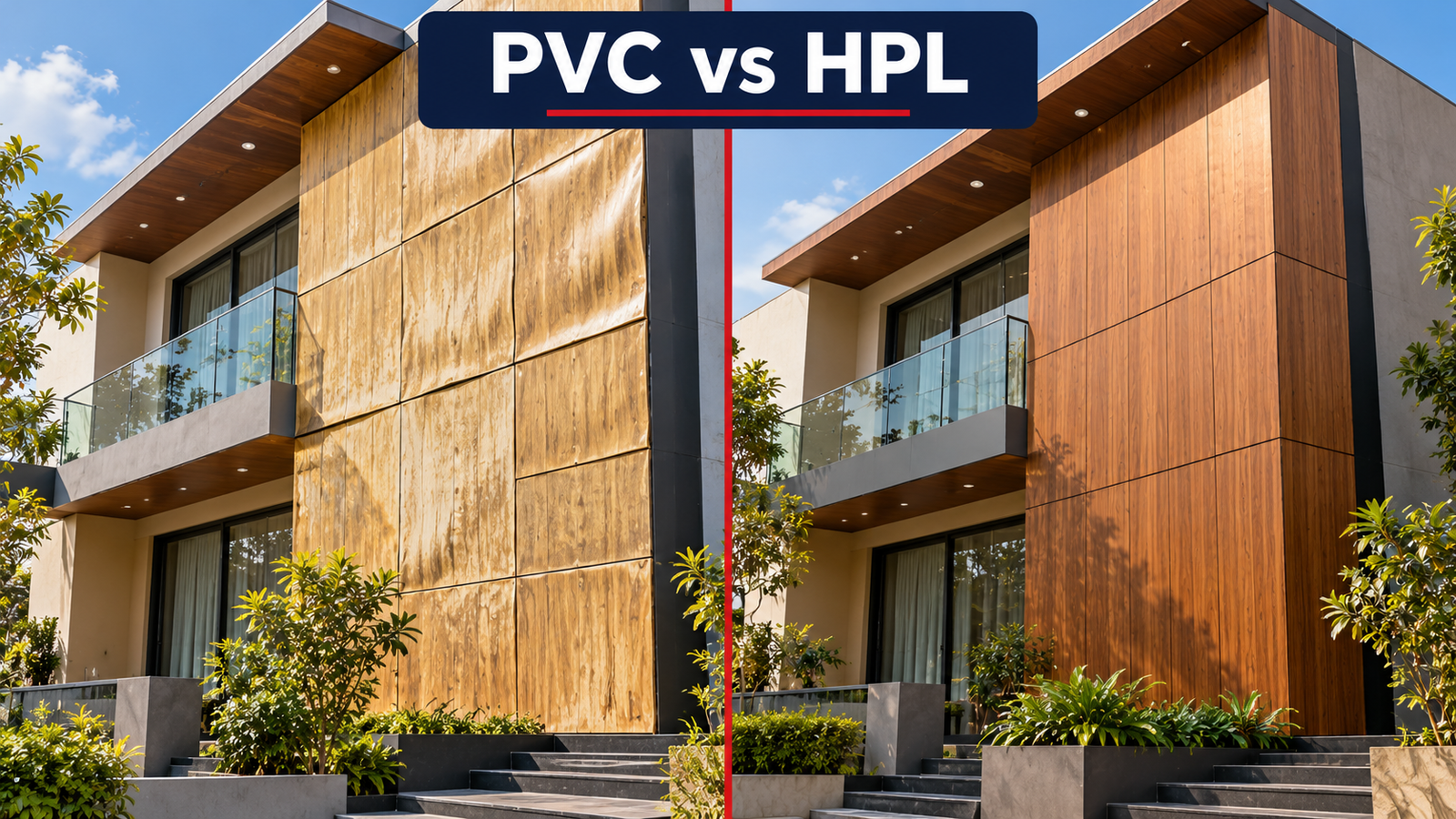
PVC wall panels are cheap, light and look great in a shop. But an outside wall in India gets 45°C summers, months of monsoon and harsh UV. Here's what happens when PVC goes outdoors, and why HPL is built for that job.
Exterior PVC wall panels work best in covered or shaded areas, because strong sun can make them fade, turn brittle and warp. For walls exposed to direct sun and rain, exterior HPL is the more reliable choice. It stays stable in heat, keeps its colour under a UV-protective layer and comes with a 15-year warranty from UVCLAD.
- PVC panels are waterproof and affordable, but heat and UV are their weak points.
- PVC expands a lot in heat, so outdoor panels can bow, gap or crack at the joints.
- HPL is a dense, heat-stable board with a factory-sealed UV finish.
- Use PVC for covered areas; use HPL for open, sun-facing exterior walls.
PVC Wall Panels
Plastic panels, usually hollow or foam-filled, with a printed film or coloured surface. Light, waterproof and easy to fix.
Exterior HPL
Layers of resin-soaked kraft paper pressed under high heat and pressure into one solid board, with a UV-protected decorative top.
What Are Exterior PVC Wall Panels?
PVC (polyvinyl chloride) wall panels are made by pushing heated plastic through a mould. Most are hollow inside, with thin ribs, or have a lightweight foam core. A wood, stone or marble print is laminated on top. They snap or screw together and are popular for ceilings, bathrooms, shop interiors and quick makeovers.
Some brands sell "outdoor PVC wall panels" with added UV stabilisers. These last longer outside than regular indoor panels, but the base material is still plastic, and plastic reacts strongly to heat.
What Is Exterior HPL?
HPL stands for High Pressure Laminate. It's made by stacking layers of kraft paper soaked in resin, adding a decorative layer on top, and pressing them under intense heat and pressure until they fuse into one dense, solid board. Exterior-grade HPL gets a UV-protective top coat so the colour doesn't fade outdoors. UVCLAD sheets also use a Japan nano coat for extra surface protection.
See the Heat Difference
Drag the slider to see how each material behaves as an exposed wall heats up. On a sunny Indian afternoon, a dark exterior surface can get much hotter than the air around it.
Illustrative guide to general material behaviour. Actual results depend on product grade, colour, thickness and installation.
PVC vs HPL: Side-by-Side
| Factor | Exterior PVC Panels | UVCLAD Exterior HPL |
|---|---|---|
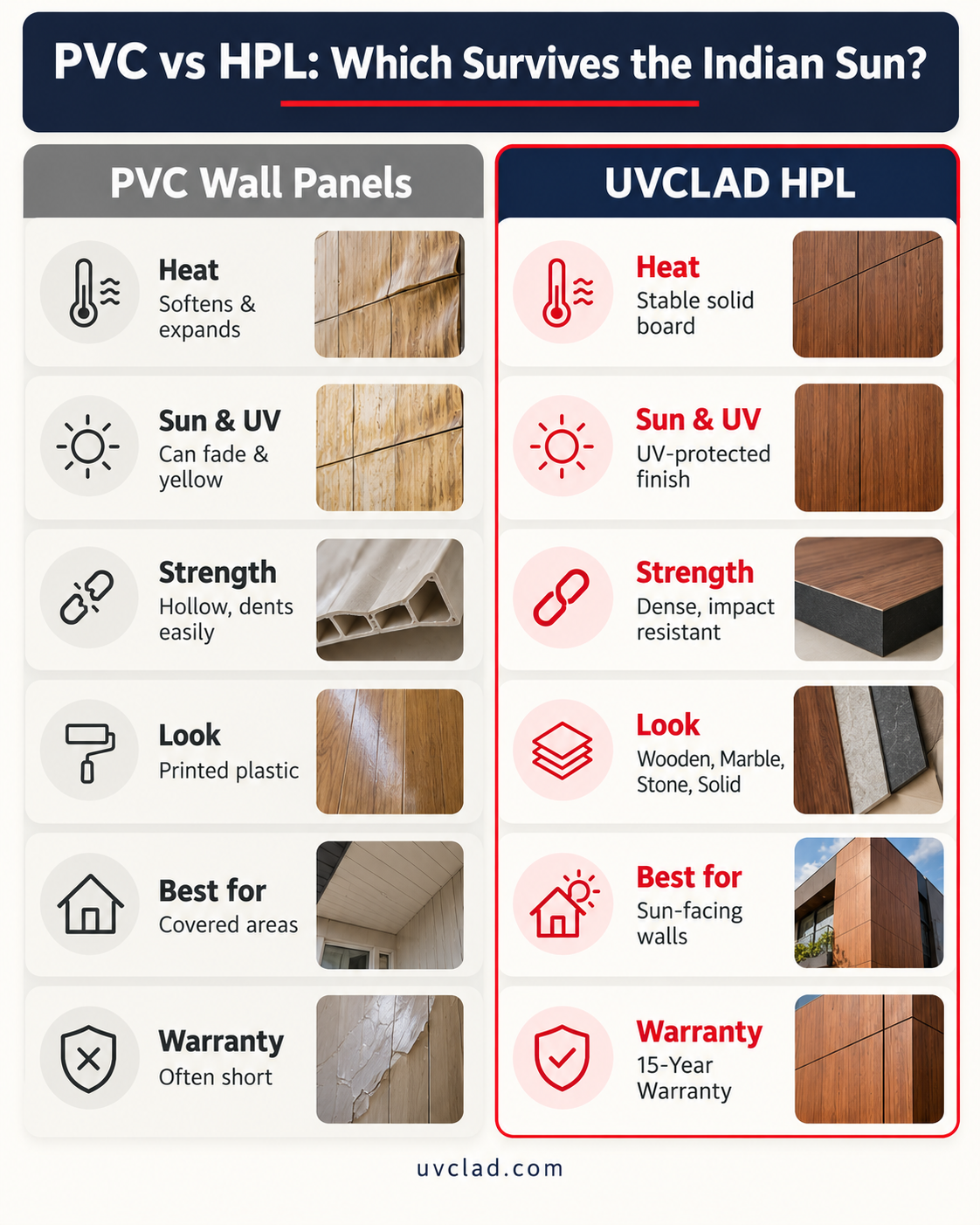
| Heat stability | Softens and expands in strong heat | Stable, solid board |
| Sun & UV | Can fade, yellow or turn brittle | UV-protective top layer |
| Water | Waterproof | Near-zero absorption |
| Strength | Hollow panels dent or crack on impact | Dense and impact-resistant |
| Look | Printed film; can look plastic up close | Wooden, Marble, Stone and Solid series |
| Fire | Plastic; gives off thick, harmful smoke if it burns | Fire-resistant grades |
| Upfront cost | Low | Higher |
| Warranty | Often short or indoor-only | 15 years |
Why PVC Struggles on Open Exterior Walls
Heat makes it move
PVC expands several times more than HPL when it heats up. On a long exterior wall, panels that fit perfectly in the morning can push against each other by afternoon. Over many hot days, that movement leads to bowing, open gaps at the joints and clips that loosen.
UV breaks it down
Sunlight slowly attacks plastic. Even with stabilisers, many PVC panels fade, yellow or turn chalky, and the surface can become brittle and crack. Dark colours, which absorb the most heat, usually suffer first.
Hollow means fragile
Most PVC panels are hollow inside, so a ladder, ball or bump can dent or crack them. On a gate, compound wall or ground-floor elevation, that happens more often than you'd think.
Why HPL Holds Up Outdoors
It stays put in heat. HPL is a pressed, solid board, so it doesn't soften or bow in summer temperatures the way plastic does.
The colour is protected. The decorative layer sits under a UV-protective coat, so wood, marble and stone designs keep their depth in strong sun. Our guide on whether HPL fades in sunlight explains how this works.
It feels premium. HPL has real weight and a solid surface, so the finish looks rich even up close. Explore the Wooden, Marble, Stone and Solid Colours series.
It's built to last. HPL is fixed on a proper frame with planned expansion gaps, and UVCLAD backs it with a 15-year warranty.
Which One Is Right for Your Wall?
1. Does the wall get direct sun for a few hours a day?
2. Is this a main elevation, gate or feature wall people will see?
PVC panels work well for…
- Covered verandahs and porch ceilings
- Bathrooms, kitchens and interiors
- Shaded utility areas and store rooms
- Short-term or very low-budget projects
Choose UVCLAD HPL for…
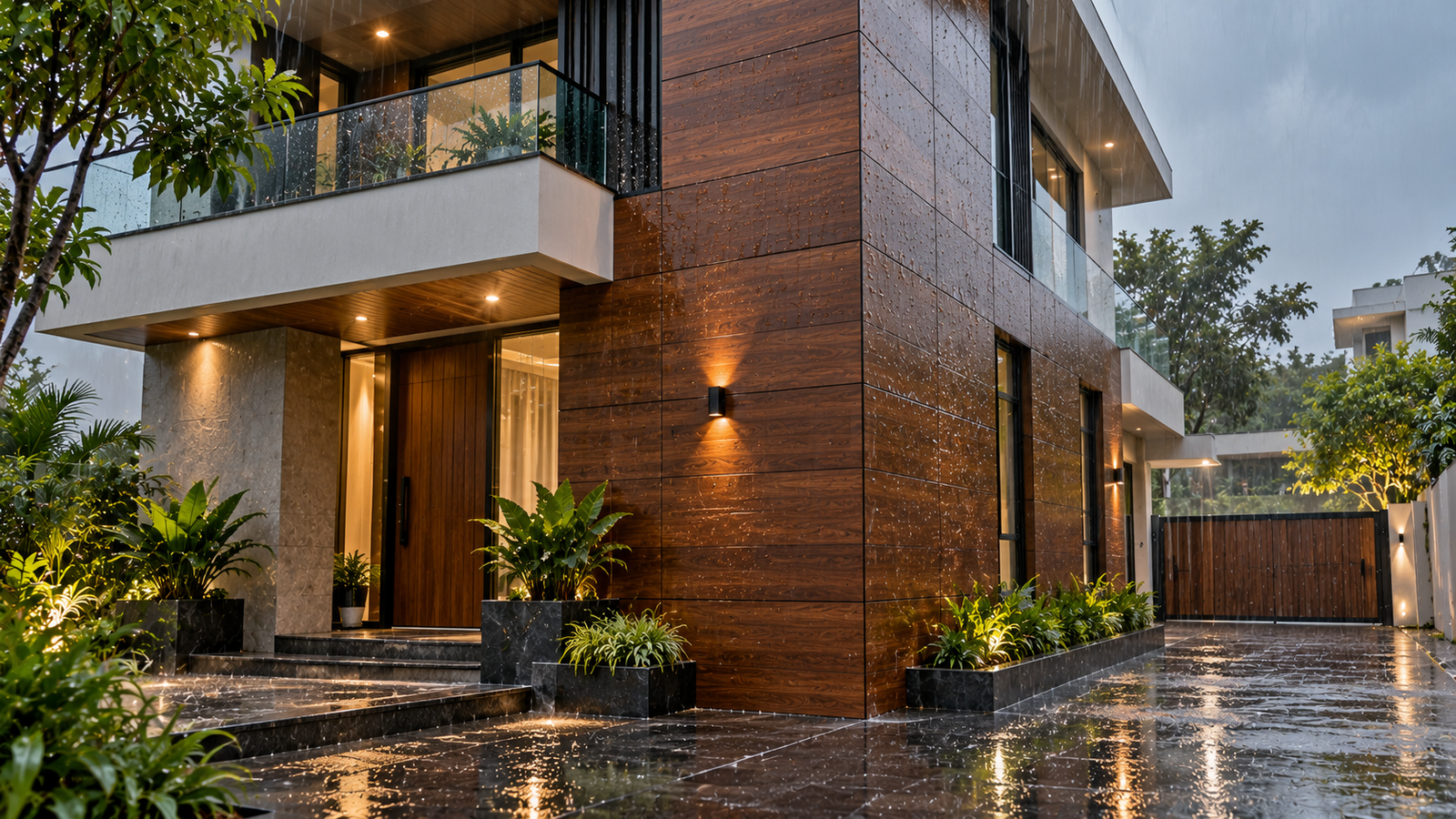
- Front elevations in direct sun
- Main gates and boundary walls
- Balconies and open terraces
- Any wall you want to look premium for years
Planning the project? Read our exterior HPL installation process and work out quantities with our guide on how many HPL sheets you need.
Frequently Asked Questions
Can PVC wall panels be used outside?
Yes, but they work best in covered or shaded areas. In direct sun, PVC can fade, turn brittle and warp because plastic softens and expands in heat. For open exterior walls, exterior HPL is more reliable.
Is HPL better than PVC for exterior walls?
For walls exposed to sun and rain, yes. HPL is a dense, heat-stable board with a UV-protective finish, so it holds its shape and colour better outdoors. PVC is cheaper and fine for covered or interior use.
Do outdoor PVC wall panels fade in the sun?
Many do over time. UV light breaks down plastic, which can cause fading, yellowing and a chalky surface, especially in darker colours. UV-stabilised panels last longer but still face this risk in strong Indian sun.
Why do PVC panels warp outdoors?
PVC expands much more than HPL when it heats up. On a sunny wall, that daily expansion and shrinking can make panels bow, open gaps at the joints or loosen their clips.
How long does UVCLAD exterior HPL last?
UVCLAD exterior HPL is built for long outdoor life and comes with a 15-year warranty.
Want an exterior that stays new in the sun?
Explore UVCLAD exterior HPL in four premium series, backed by a 15-year warranty.
Shop HPL Sheets Get a Free Quote