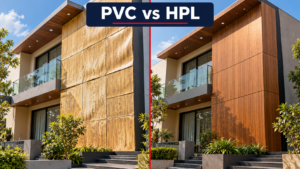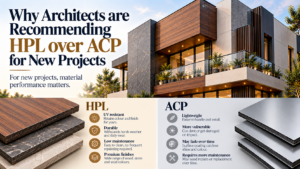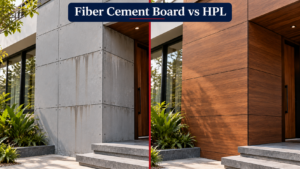
Four finish families, dozens of tonal variants within each, and most homeowners land on a decision by scrolling reference photos until something feels right. That works, up to a point. Here’s a more structured way to narrow it down that accounts for things a reference photo usually can’t show you.
Start with your home’s existing architecture, not the finish catalogue
A facade finish has to work with what’s already built — the roofline, the window proportions, the existing boundary wall material if it’s staying. A heavily textured stone finish on a home with a lot of small, closely-spaced windows can start to feel visually busy. A flat solid tone on a home with strong architectural lines often lets that architecture read more clearly. Look at your house first, then go to the catalogue, not the other way round.
Factor in which direction the wall faces
This matters more than most people expect. A west-facing wall in most Indian cities takes brutal afternoon sun for a large part of the year — darker tones here will run noticeably warmer to the touch and, over many years, show any gradual fade slightly sooner than the same tone would on a shaded or east-facing wall. This isn’t a reason to avoid dark tones on a west wall entirely, but it’s worth knowing before you commit a whole west elevation to a very deep colour.
Think about upkeep expectations honestly
Every UVCLAD finish needs the same basic maintenance — a wash roughly twice a year. But visually, solid tones show dust and watermarking slightly more than textured wood or stone finishes do between washes, simply because there’s no pattern to disguise it. If the property is on a dusty main road and you know washing won’t happen on schedule, that’s a small but real factor worth weighing.
Match the finish to the statement you actually want to make
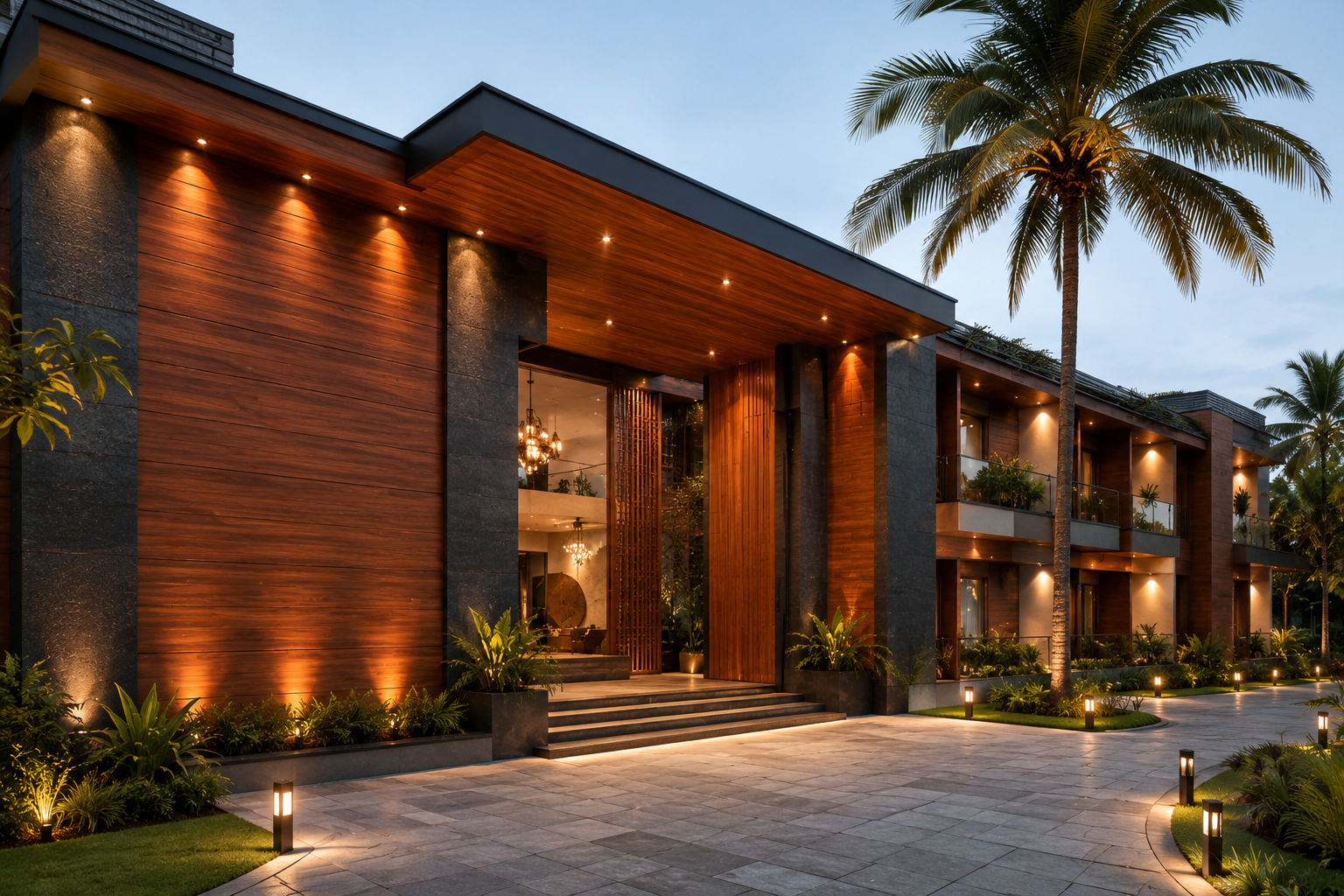
This sounds obvious but gets skipped. A wood-finish facade reads warm and approachable. A stone-texture facade reads substantial and grounded. A marble-finish feature reads premium and formal. A solid tone reads clean and contemporary. None of these is objectively “better” — they’re different statements, and it’s worth being honest with yourself about which one actually matches how you want the house to feel, not just which one is trending.
Don’t decide from a screen
This is the one piece of advice that matters more than any of the above. Every finish looks different under real daylight than it does on a phone or laptop screen, and different again depending on the specific light in your city and the time of day. Order physical samples of your shortlist — two or three, not ten — and look at them against your actual wall, in morning and evening light, before finalising anything.
A simple way to shortlist
Pick your architectural direction first (textured and warm, or clean and minimal). That immediately narrows the field to roughly half the catalogue. Then pick based on your facade’s sun exposure and your realistic maintenance habits. What’s left is usually two or three genuinely strong options, not forty.
FAQ
Can I mix finishes from different series, like wood and marble, on the same facade?
Yes, and it’s a common approach — see our elevation design ideas post for real combinations that work well together.
How many sample panels can I request before ordering?
We’re happy to send a reasonable shortlist of samples rather than one — better to compare two or three in person than commit based on a single option.
Does the finish choice affect the warranty in any way?
No, the 15-year warranty terms are the same across all UVCLAD finish series.
Get a finish recommendation on WhatsApp — send a photo of your home and which direction it faces, and we’ll narrow the options down before you order samples.